








The Eating Habits of Early Seafarers
Ensuring that food remained edible throughout long sea voyages was one of the greatest challenges aboard ships in earlier centuries. Many provisions stored in damp cargo holds quickly deteriorated under adverse environmental conditions, becoming rotten or infested with worms. Another constant threat to shipboard food supplies was rats. Seafarers' provisions were often contaminated by rodent urine and droppings, while the diseases carried by these animals frequently led to deadly epidemics on board.
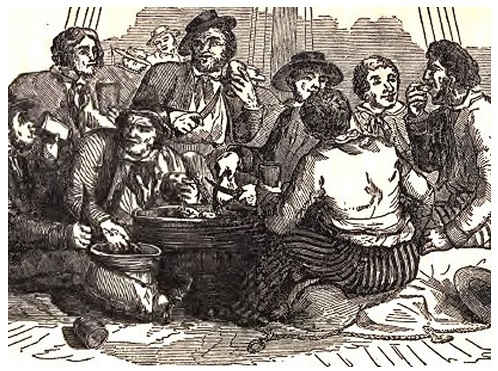
Until the beginning of the nineteenth century, the principal diet of seafarers consisted of salted meat and dried foodstuffs. Depending on availability, these staples were occasionally supplemented with fish, oil, cheese, and beans. Among all provisions, however, hardtack—a hard, dry ship's biscuit—was by far the most indispensable food for long voyages. Its nutritional value, low production cost, and exceptional durability under maritime conditions made it the cornerstone of a sailor's diet for centuries.
Throughout history, dry and hard foods remained the preferred provisions of seafarers. Physicians of the ancient world, who attributed many illnesses to digestive disorders, likewise believed that such foods promoted good health. Ancient Egyptian sailors carried flat, crisp loaves made from millet bread known as dhourra, while Roman seafarers relied on buccellum, a type of hard biscuit that formed the basis of their daily rations. Likewise, when King Richard the Lionheart of England embarked on the Third Crusade, he took with him a biscuit known as biskit of muslin, prepared from barley, rye, and bean flour.
Hardtack was commonly produced from the flour of cereals and legumes such as barley, maize, wheat, rye, beans, and chickpeas. A finer variety, reserved for captains, was prepared from refined white flour. To increase both hardness and shelf life, bakers normally baked hardtack twice. Biscuits intended for lengthy voyages were baked four times and prepared as much as six months before departure. Owing to its extremely low moisture content, hardtack could withstand sudden temperature changes and harsh marine conditions for extended periods. When stored correctly in a dry environment, a single biscuit could remain intact for many years.
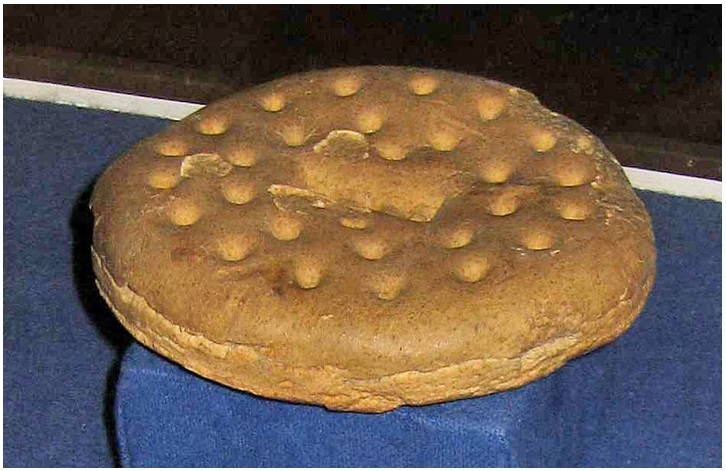
The oldest surviving example of a sailor's hardtack, dating from 1852, is preserved today at Kronborg Castle in Denmark.
Despite its remarkable durability, hardtack was so hard that it occasionally broke sailors' teeth. To make it easier to eat, it was usually soaked in brine, coffee, or another liquid, or fried together with other food. By the late eighteenth century, crushed hardtack was also being used as an ingredient in fish soups prepared in New England.
Exposure to moisture and the harsh marine environment gradually softened hardtack, making it easier to consume. At the same time, however, it frequently became infested with worms and insects. Interestingly, this was not regarded as entirely undesirable, since the worms provided a valuable source of protein for poorly nourished sailors. An unusual method was employed to keep insects away from the biscuits: a dead fish was placed on top of the crates containing the hardtack. Once it had attracted the insects, the fish was simply thrown overboard.
To prevent spoilage, staple foods such as meat and fish were preserved by drying, salting, smoking, or curing in brine. Salted and brined meat was stored in wooden barrels and crates. During long voyages, beef, pork, and even horse meat were commonly preserved in brine-filled barrels. These preserved meats were eaten together with hardtack, while the remaining brine was often used to season meals. Since brine gradually deteriorated over time, the preserved meat eventually spoiled as well. When meat supplies became scarce, sailors were issued flour mixed with animal fat as a substitute. Some vessels also carried live animals on board, slaughtering them during the voyage whenever fresh meat was required.
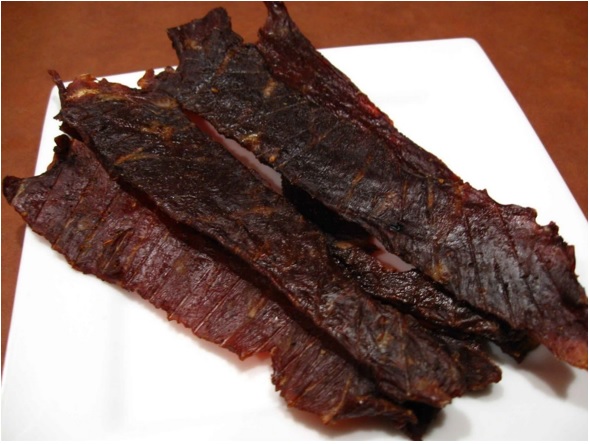
Certain foods, such as meat and fish, were dried, salted, smoked or pickled to prevent them from spoiling.
Providing a balanced diet during lengthy voyages was another major challenge, particularly as proper nutrition became increasingly important on extended sea passages. In 1588, the standard daily ration for a sailor serving in the Royal Navy consisted of one pound of hardtack and one gallon (approximately 4.62 litres) of beer—a diet that was clearly insufficient to meet the nutritional requirements of men performing physically demanding work at sea.
Poor nutrition and vitamin deficiencies were responsible for many fatal illnesses among seafarers, the most notorious of which was scurvy. During the great ocean voyages of earlier centuries, particularly on transoceanic expeditions, it was not uncommon for up to half of a ship's crew to die from the disease. The underlying cause was a severe deficiency of vitamin C, resulting from the absence of fresh fruit and vegetables in the sailors' diet.
Fresh fruit and vegetables loaded before departure were generally consumed during the first months of the voyage. Whenever a vessel called at a port, supplies could be replenished. During long ocean crossings, however, such opportunities were rarely available. In tropical regions, fresh produce spoiled much more rapidly, creating ideal breeding conditions for flies and other insects capable of spreading disease.
Drying was one of the most effective methods of preserving vegetables for extended periods. Throughout long voyages, sailors were issued measured quantities of dried peas and beans, as these legumes remained edible for considerable lengths of time under maritime conditions. In the Far East, rice was the principal staple food consumed by seafarers. However, when eaten in its polished form, it caused beriberi, a disease resulting from vitamin B1 deficiency. Another commonly issued food was oatmeal, which also had an extended shelf life, although its greatest disadvantage was its tendency to attract insects.
Pickling provided another practical means of preserving vegetables. German sailors regularly included Sauerkraut—fermented cabbage, a preservation method they had learned from the Turks—in their daily diet. Eastern seafarers likewise consumed large quantities of pickled vegetables, onions, and garlic, and consequently rarely suffered from scurvy.
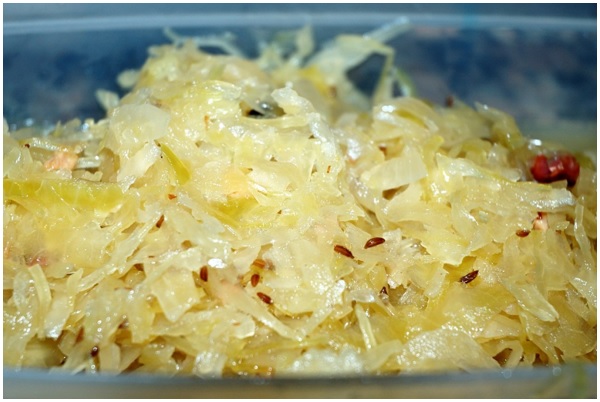
German crews enjoyed similar protection thanks to the regular consumption of sauerkraut.
It was Captain James Cook who first recognised the remarkable effectiveness of sauerkraut in preventing scurvy. Convinced of its value, he ordered 25,000 pounds of sauerkraut for his two ships. In later years, limes gradually replaced sauerkraut, and carrying citrus fruit on long-distance voyages became standard practice as an effective safeguard against the disease.
To supplement their calcium intake, crew members were occasionally supplied with cheese and butter, although ordinary sailors generally received smaller portions than officers. Before refrigeration became available, cheese was sealed with beeswax and stored at ambient temperature. As long as the wax seal remained intact and air could not penetrate it, the cheese remained fit for consumption throughout the voyage. Butter, however, could not be preserved in the same way. It deteriorated soon after departure and was therefore distributed to the crew until it spoiled. Once it was no longer suitable for consumption, it was used as a lubricant for the ship's ropes.
On rare occasions, sailors even consumed gunpowder in the belief that it would compensate for mineral deficiencies. Small quantities were sprinkled over bread or cheese before eating. When British travellers visited Anatolia during the early nineteenth century, local people were astonished to see them using gunpowder instead of salt at mealtimes and reportedly asked whether the English always ate gunpowder. At the time, it was widely believed that consuming gunpowder not only supplied essential minerals but also helped prevent blood poisoning.
Storing potable water during long sea voyages presented yet another serious challenge. Water kept in wooden barrels would become muddy within a few weeks and eventually turn green as algae formed. Even after it had deteriorated, the crew had no alternative but to drink it. Bacteria that developed in contaminated water frequently caused outbreaks of dysentery, typhoid, and cholera. Consequently, the crew's first priority whenever a vessel reached land was to locate a source of fresh drinking water.
Alcoholic beverages such as beer and wine remained potable far longer than water. Sailors were therefore issued a daily ration of alcoholic drinks until the supply was exhausted, after which they reverted to drinking water. To improve the taste of stale water, rum was often added, producing a beverage known as grog. In tropical climates, wines exposed to extreme heat frequently spoiled and turned into vinegar, which was then used to disinfect the vessel.
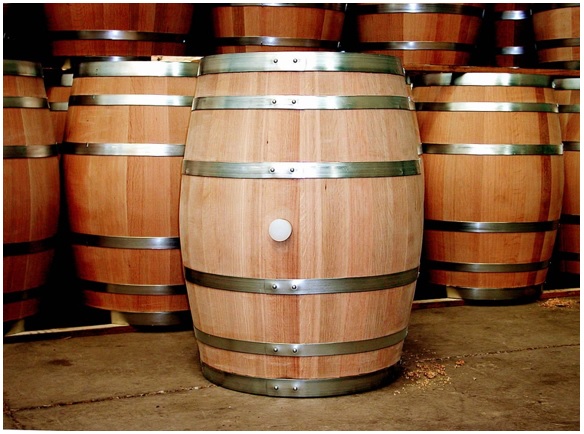
Beverages aboard ship were generally stored in oak barrels.
At that time, longitude could not yet be determined accurately, making it impossible to predict the exact duration of a voyage. As a result, journeys often lasted much longer than originally planned. Whether the available food and water would be sufficient for the entire passage was always uncertain, so provisions were rationed carefully and distributed sparingly among the crew.
Several sixteenth-century records provide detailed information on the daily food rations issued to sailors. One such example is the 1568 victualling schedule of the Spanish Armada, which was organised as follows:
Mondays, Wednesdays and Fridays
• 1½ pounds of hardtack (approximately 680 g)
• 1 litre of water
• 1 litre of wine
• Half a peck (approximately 4.5 litres) of dried broad beans and chickpeas for every 12 men
• 1 pound of salted fish (approximately 450 g) for every 3 men
Tuesdays
• 1½ pounds of hardtack (approximately 680 g)
• 1 litre of water
• 1 litre of wine
• 1 pound of rice cooked with oil (approximately 450 g) for every 10 men
• ½ pound of salted pork (approximately 225 g)
Sundays and Thursdays
• 1½ pounds of hardtack (approximately 680 g)
• 1 litre of water
• 1 litre of wine
• 1 pound of brined meat (approximately 450 g)
• 2 ounces of cheese (approximately 57 g)
Monthly ration
• 1 litre of oil per person
• Slightly more than half a litre of vinegar per person
Hardtack and brined meat remained the principal foodstuffs of seafarers until the early nineteenth century, when canned foods first entered production. With the advent of the Industrial Revolution, hardtack began to be manufactured mechanically, and in 1814 the first canned meats were introduced to the market.
These early canned products, packed in tin-plated containers, proved exceptionally durable during long voyages and soon became an integral part of the sailor's daily diet. Their lids, however, were sealed with lead solder, and the lead that came into contact with the food frequently caused fatal cases of poisoning.
As canning technology advanced, both preservation techniques and product variety improved significantly. Before long, the brine barrels that had once filled ships' holds were gradually replaced by rows of canned provisions.
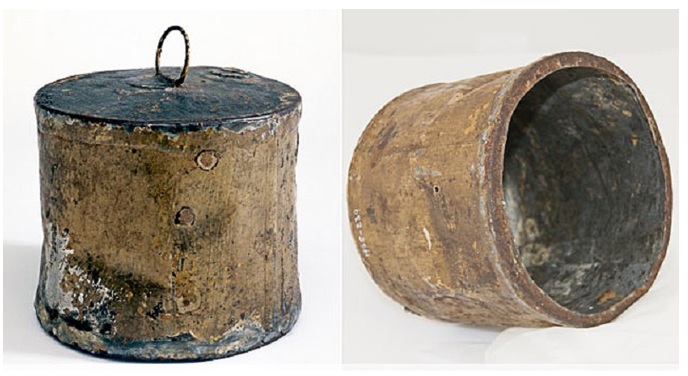
The first canned foods produced in tin cans were ideal for long voyages, but the lead solder used to seal them caused food poisoning.
Another method introduced during the nineteenth century to preserve food on board was refrigeration. Large blocks of ice, treated with special insulating materials to slow the melting process, were used for this purpose. Although the preservation of food with ice had been known for thousands of years, it was not until the nineteenth century that this method became practical for maritime use.
With the emergence of the commercial ice trade, refrigerated storage gradually became more widespread, particularly on vessels transporting ice to tropical regions. For most merchant ships, however, this method remained both impractical and prohibitively expensive, preventing its widespread adoption.
At the beginning of the twentieth century, traditional ice storage was progressively replaced by mechanical refrigeration systems and cold-storage facilities. This technological advancement enabled ships to preserve virtually every type of food throughout even the longest voyages, representing a major milestone in the history of maritime provisioning. It significantly improved both the quality of life and the nutritional standards of seafarers serving at sea.
The introduction of refrigeration transformed shipboard victualling. It not only extended the shelf life of provisions but also greatly reduced the health risks associated with spoiled food and nutritional deficiencies. As refrigeration technology continued to evolve throughout the twentieth century, the harsh dietary conditions that had characterised life at sea for centuries gradually became a thing of the past.
References:
- Darwin, Francis Sacheverell. Travels in Spain and the East, 1808–1810. Cambridge University Press, Cambridge Library Collection, 2009. ISBN: 9781108004312.
- Royal Navy Museum. Ship's Biscuits – Royal Navy Hardtack. Retrieved 14 January 2010.
- Perez-Mallaína, Pablo E., translated by Carla Rahn Phillips. Spain's Men of the Sea: Daily Life on the Indies Fleets in the Sixteenth Century. Baltimore: The Johns Hopkins University Press, 1998.
- The Mariners' Museum. Starving Sailors: Provisions at Sea.
www.marinersmuseum.org
- Fury, Cheryl A. The Social History of English Seamen, 1485–1649. Woodbridge: The Boydell Press, 2012. ISBN: 978-1-8438-3689-6.


YAZIYA YORUM KAT
Türkçe karakter kullanılmayan ve büyük harflerle yazılmış yorumlar onaylanmamaktadır.