









“Maritime Superstitions and Practices”
For centuries, sailors believed that certain objects could bring them luck. Mystical practices such as carrying lucky charms to ward off bad fortune, wearing amulets against the evil eye, and tattooing their bodies were once highly popular among seafarers. Of course, most of these beliefs had no scientific basis whatsoever; nevertheless, some of these practices did emerge from seemingly reasonable observations and experiences.
Before discussing the common superstitions and practices among sailors, it may be useful to first understand the reasons behind their emergence.
In ancient times, before the existence of navigation and communication tools, it was impossible for a ship sailing on the open sea to predict what it might encounter during a voyage. A sudden violent storm could cause a vessel to lose its course and perhaps even bring the journey to an end. Prolonged voyages often led to epidemics and deaths aboard ships, particularly on transoceanic expeditions where the risks were even greater. Faced with these unpredictable dangers, early sailors sought ways to ensure navigational safety and improve the chances of a successful voyage by developing various beliefs of their own. Whether these practices worked or not, one thing is certain: such beliefs had a significant psychological impact on sailors.
Most superstitions dating back to antiquity were ritualistic practices shaped by spirit worship. For example, offering wine to the god of the sea was believed to ensure a safe voyage and bring good fortune to the crew. Throwing stones into the sea, on the other hand, was thought to disrespect sea spirits and stir up the waves. Similarly, whistling on deck was believed to summon strong winds. Another ancient practice believed to bring luck was the tradition of placing a silver coin beneath the main mast.
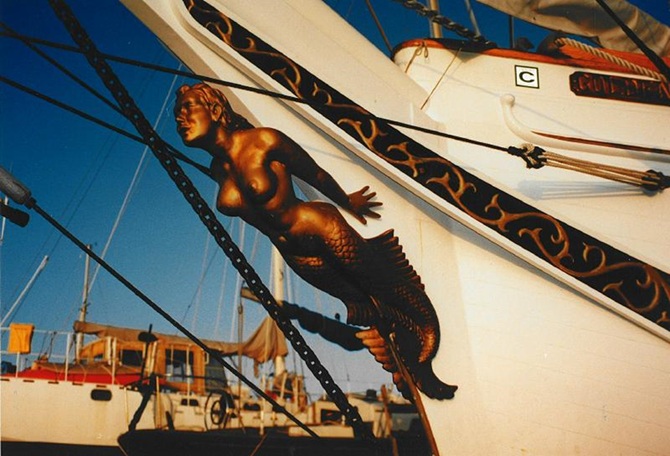
Sailors of earlier eras believed their ships were female and therefore considered the presence of women aboard to be bad luck, as the ship might become jealous and sink them in anger. In reality, this belief stemmed from the idea that a woman on deck would distract sailors and provoke jealousy among the crew. The sole exception to this rule was the nude female figureheads placed at the bow, which were identified with the spirit of the ship itself. Ancient sailors believed that the image of a naked woman would calm the waves, a belief most likely rooted in ancient sacrificial traditions associated with the sea.
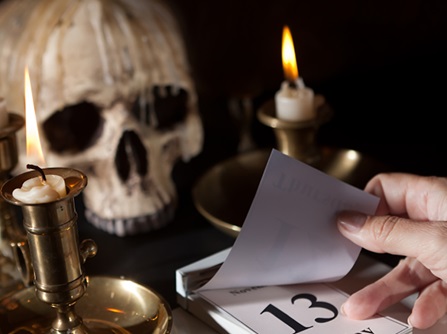
Certain days were also considered unlucky for setting sail. Fridays, December 31st, the first Monday of April, and the second Monday of August were all regarded as ominous. The origins of these beliefs were tied to sacred scriptures: Judas was believed to have hanged himself on December 31st; Cain killed Abel on the first Monday of April; and Sodom and Gomorrah were destroyed on the second Monday of August. In addition, the number 13 was considered unlucky due to its association with the Last Supper of Jesus Christ, and sailors often preferred to say “12+1” instead.
Anything associated with death was considered bad luck at sea. Even flowers on deck were avoided because they evoked funeral imagery. Wearing the clothes of deceased sailors was believed to bring disaster. Considering that hygiene was poorly understood in times when epidemics claimed countless lives, it is hardly surprising that sailors believed in such curses. Sailors also avoided using the word “drown,” believing that uttering it could bring death. The psychological roots of these superstitions are obvious, as constant talk of death could lead the crew into depression and potentially increase cases of suicide.
The color black, being associated with death, was also regarded as unlucky among sailors. Carrying belongings in black bags or wearing black clothing was avoided. Even the presence of priests aboard ship was considered inauspicious because of their black robes. The only exception to this superstition was black cats.
Cats, considered sacred by many civilizations since antiquity, were always regarded as lucky animals by sailors. Even black cats, often viewed as unlucky in many cultures, were believed to bring good fortune at sea. Superstitious sailors believed cats possessed magical powers capable of protecting ships from storms. Sailors also interpreted cats’ behavior as indicators of weather conditions. If the ship’s cat groomed itself unusually, a hailstorm was believed to be approaching; if it sneezed, rain was expected; and if it became restless, windy weather was thought to be imminent.
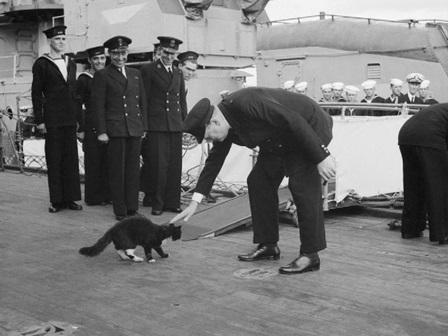
Winston Churchill visiting HMS Prince of Wales together with the ship’s cat, Blackie.
It was considered good luck if the ship’s cat approached a sailor, but if the cat turned back halfway, this was taken as a bad omen. Everyone aboard tried to keep the cat content. If a cat fell overboard or was thrown into the sea, it was believed that the magical power in its tail would conjure a terrible storm capable of sinking the ship. Even if the crew survived, they were said to be cursed for nine years. Sailors’ wives also believed that keeping a black cat at home would protect their husbands at sea.
Aside from superstition, there were many practical reasons for keeping cats aboard ships. Most importantly, cats were highly effective at catching rodents that gnawed through ropes, destroyed food supplies, and spread disease. Polydactyl cats, possessing extra toes, were especially favored for this purpose. Cats also provided companionship for homesick sailors, boosting morale among the crew.
Seeing swallows during a voyage was considered a good sign, while spotting woodcocks or cormorants was regarded as bad luck. Dolphins swimming ahead of the ship were also interpreted as favorable omens. In times before navigational charts, the movements of such animals likely helped sailors predict currents, winds, and weather conditions. There was also a widespread belief that anyone who killed a seagull, dolphin, or albatross would have their soul cursed.
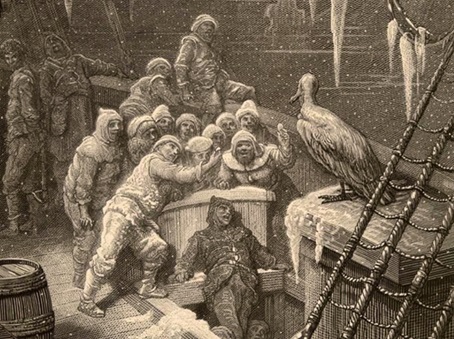
Another phenomenon regarded as a lucky sign among sailors was the rare atmospheric event known as St. Elmo’s Fire, which occasionally appeared on ships sailing through stormy weather. Named after Saint Erasmus of Formia, the patron saint of sailors, the phenomenon was caused by electrical discharges between the ship’s masts and the strong electric field in the atmosphere. Sailors who witnessed the bright blue-violet lights glowing at the tips of the masts often interpreted them as a sign that their patron saint was with them. The lights were frequently accompanied by a noticeable whistling or buzzing sound.
St. Elmo’s Fire had been known since antiquity and was generally associated with good fortune across many cultures. Ancient Greek sailors called single lights appearing above their ships “Helene” (ἑλένη), meaning torch, while pairs of lights were referred to as “Castores and Polydeukes” (Κάστορας και Πολυδεύκης). These mythological twins, also known as the Dioscuri (Διόσκουροι), were sons of Zeus and protectors of Greek sailors. The Romans knew them as Castor and Pollux, or Gemini.
The mysterious lights seen above ships were sometimes associated with nature spirits known as acthnici. Welsh sailors referred to them as “Spirit Candles” (canwyll yr ysbryd), “Candles of the Holy Spirit” (canwyll yr ysbryd glân), or “Candles of Saint David.” Acthnici were believed to be a type of salamander-like fire spirit, and during the Middle Ages these elemental beings were thought to be among the most powerful spirits capable of influencing the human nervous system. In reality, these descriptions clearly referred to the invisible and poorly understood force of electricity.
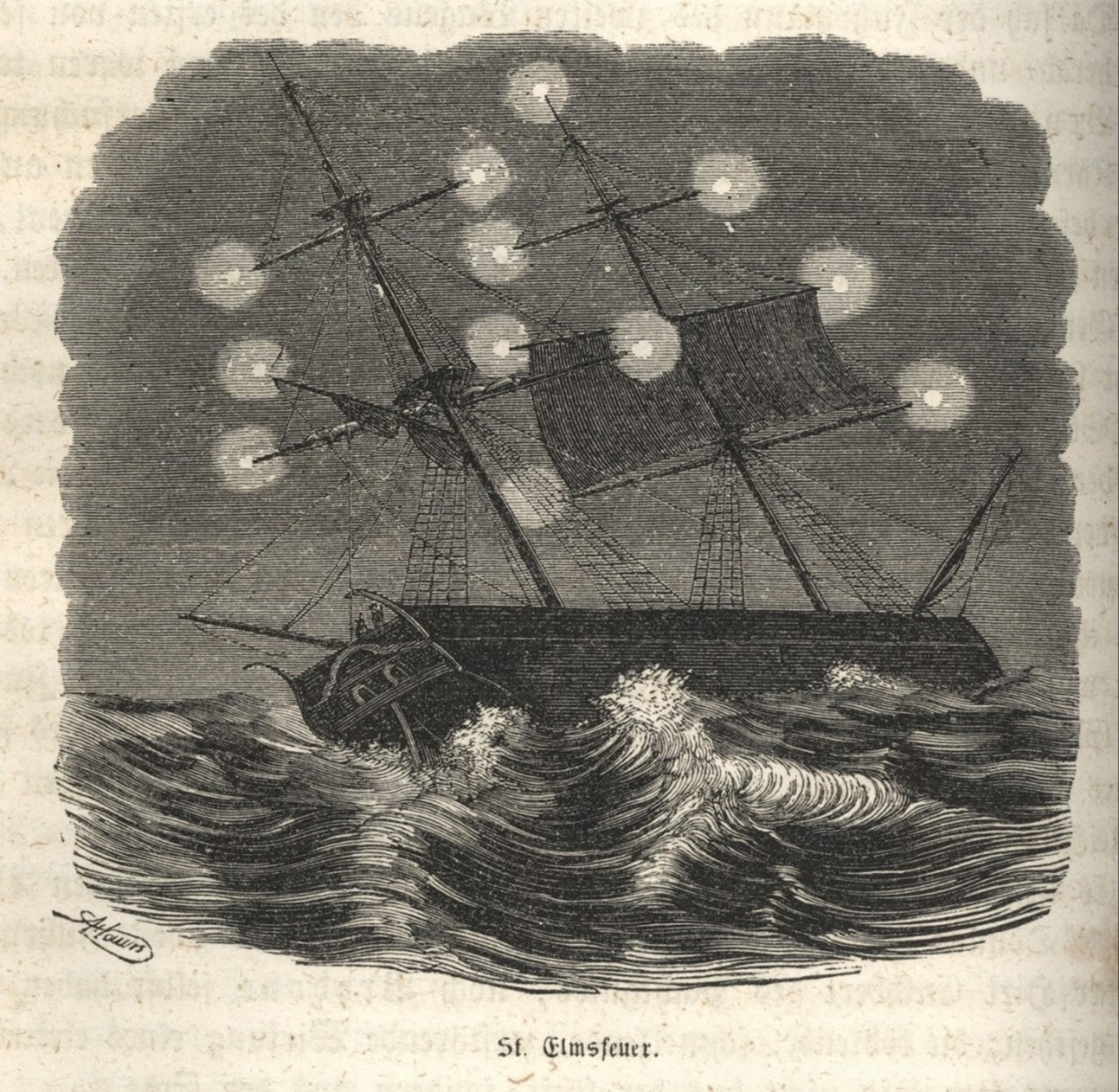
St. Elmo’s Fire had been known since ancient times and was generally associated with good fortune throughout history.
The famous 15th-century Admiral Zheng He described these lights as divine signs from Tianfei, the goddess of sailors. Portuguese sailors associated the phenomenon with Jesus Christ and called it “Corpo Santo,” meaning “Holy Body.” Russian sailors believed the lights belonged to Saint Nicholas or Saint Peter, protectors of seafarers. During the Age of Sail, however, some sailors considered St. Elmo’s Fire a sign of bad luck because the atmospheric electricity could create magnetic interference affecting compasses aboard ships.
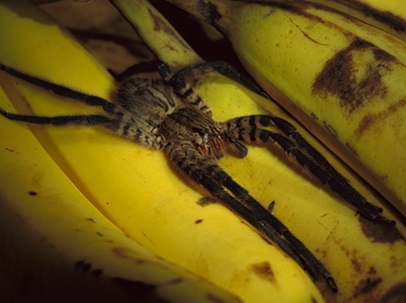
The statistical frequency of certain events also gave rise to superstitions among sailors. For example, the sinking of numerous cargo ships carrying bananas in the early 18th century led to the belief that transporting bananas aboard ship brought disaster. This likely resulted from the coincidence of banana harvest seasons with storm seasons. Another reason bananas were considered unlucky was the unusually high death rate aboard banana ships. At the time, these deaths were viewed as a curse, though there were actually two logical explanations. One was methane poisoning: bananas beginning to rot during voyages released methane gas, which accumulated in lower decks and caused poisoning, particularly among slaves transported in cargo holds alongside other goods. The second factor was a highly venomous species of spider carried aboard within banana crates. Following such incidents, bananas came to be viewed as ominous cargo, and entire shipments were sometimes thrown overboard.
The common feature underlying all the beliefs and practices discussed so far is that they were based, at least to some extent, on explainable and rational causes. Many other sailor superstitions, however, had absolutely no logical foundation. For example, red-haired sailors were believed to bring bad luck aboard ship, as were flat-footed individuals. When encountering such people, sailors believed they had to speak first before the other person did in order to reduce the bad luck.
Old sailors also considered it unlucky for someone to wish them good luck before departure. In such cases, misfortune was believed to be avoidable only through the shedding of blood, usually accomplished by punching the well-wisher in the nose. Once a voyage had begun, sailors avoided looking back, believing that doing so would attract bad luck. Similarly, if the ship’s bell rang on its own during a voyage, it was associated with death.
Cutting hair or nails at sea, losing a bucket or brush, repairing a flag at the stern, or angering the ship’s cat were all considered bad luck. Hanging a horseshoe on the mast, wearing gold earrings, getting tattoos, carrying a wren feather, and boarding a boat with the right foot first were among the practices believed to bring good fortune.
Today, most of the beliefs and practices of ancient sailors have disappeared into history. However, some old traditions once believed to bring luck—such as placing coins beneath the mast, smashing champagne bottles during ship launchings, and pouring wine into the sea—continue to survive among modern sailors.
Sources:
Eyers, Jonathan (2011). Don’t Shoot the Albatross!: Nautical Myths and Superstitions. London: A & C Black. ISBN 978-1-4081-3131-2.
Morris, Desmond; translated by Mehmet Harmancı; Protective Talismans: Lucky Charms, Amulets and Evil Eye Charms; İnkılâp Publishing House, Istanbul 1999, ISBN 9751015286.
Rappoport, Angelo S.; Superstitions of Sailors, Courier Corporation, 2012, ISBN: 9780486147376.
Strange at Sea: Maritime Myths and Superstitions, Shipwreck.net



YAZIYA YORUM KAT
Türkçe karakter kullanılmayan ve büyük harflerle yazılmış yorumlar onaylanmamaktadır.